CEC Gyanesh Kumar Row: CJP's "Jantar Mantar 2.0" Explained
CJP demands CEC Gyanesh Kumar's resignation over voter roll allegations. Know the full timeline, key claims, and the October 2 "Jantar Mantar 2.0" protest plan.
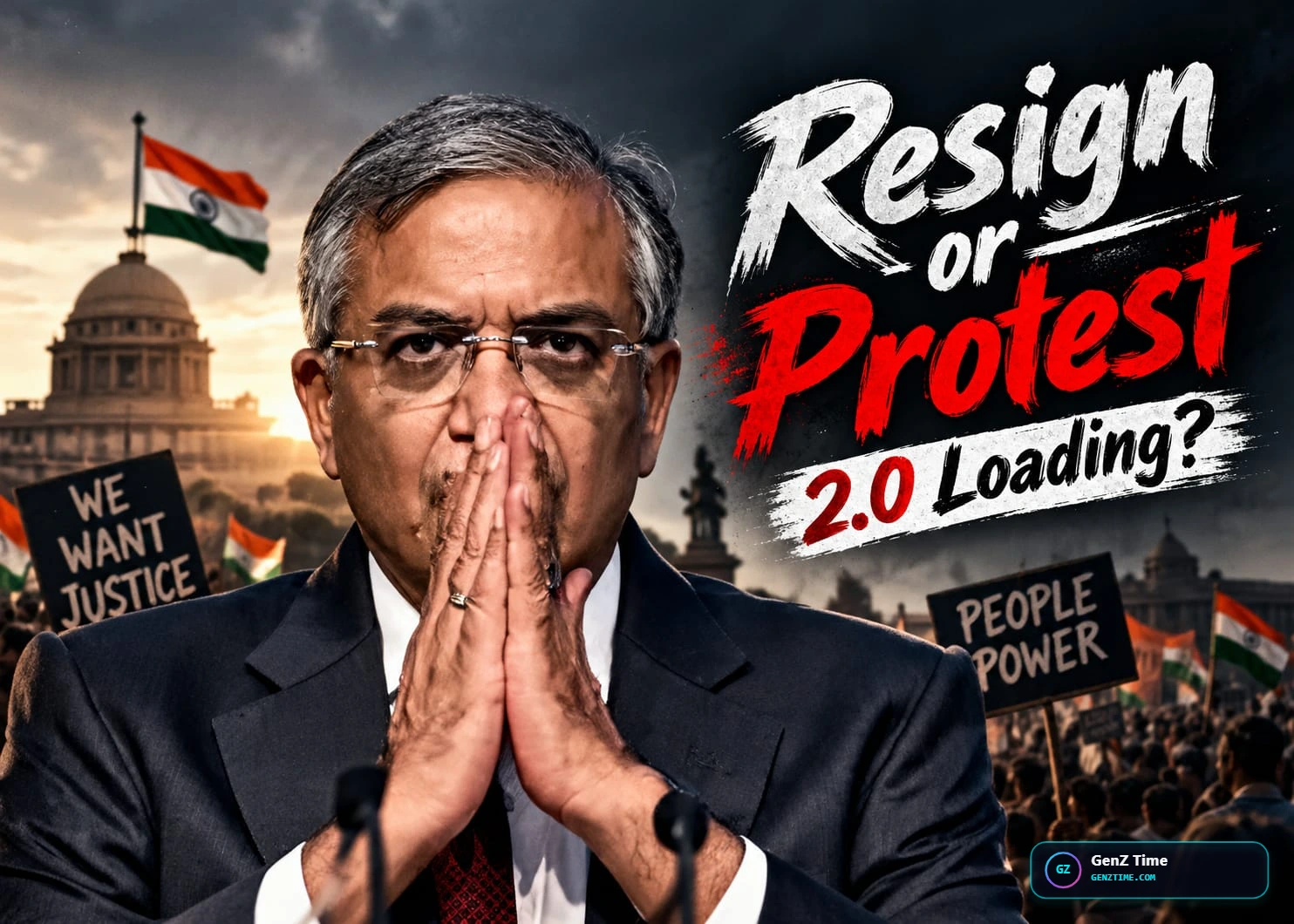
Cockroach Janta Party Threatens "Jantar Mantar 2.0" — Will CEC Gyanesh Kumar Resign?

Key Takeaways & Executive Summary
- An Indian Express investigation revealed 14 formal dissents by two Election Commissioners over 10 months, mainly tied to the Special Intensive Revision (SIR) of voter rolls.
- CJP founder Abhijeet Dipke gave CEC Gyanesh Kumar a 48-hour ultimatum to resign; the deadline passed without action.
- Dipke claims over 13 crore voters were deleted nationwide, benefiting the ruling BJP — but this is an unverified allegation, not established fact.
- CJP previously forced the resignation of Education Minister Dharmendra Pradhan through sustained protests earlier in 2026.
Cockroach Janta Party Threatens "Jantar Mantar 2.0" — Will CEC Gyanesh Kumar Resign?
India's Chief Election Commissioner (CEC), Gyanesh Kumar, is facing one of the biggest controversies of his tenure. The youth-led Cockroach Janta Party (CJP) has demanded his resignation, and if he refuses, the group says it will launch a fresh nationwide protest movement — one being called "Jantar Mantar 2.0." Here's everything you need to know about how this controversy started, what's being alleged, and whether more protests are actually on the way.
How Did This Controversy Start?
The trouble began after an investigative report by The Indian Express. According to the report, two Election Commissioners — Sukhbir Singh Sandhu and Vivek Joshi — formally objected or raised concerns at least 14 times over the past 10 months. Their objections were mainly about the Special Intensive Revision (SIR) of electoral rolls and changes to Form 6, the form used by first-time voters to register.
The dissenting commissioners reportedly said that important decisions — about adding, deleting, or restoring voter names — were being pushed through in the name of the "full commission" without their prior knowledge or proper authorization. Some of these decisions have even been described internally as "unauthorised and illegal." The Election Commission has pushed back on suggestions of any internal rift.
What Did CJP Founder Abhijeet Dipke Say?
At a press conference, CJP founder Abhijeet Dipke called Gyanesh Kumar "the biggest threat to India's democracy" and labelled him "anti-national." He alleged that during the SIR process, more than 13 crore (130 million) voters were removed from electoral rolls across major states, including Maharashtra, Uttar Pradesh, West Bengal, Delhi, Kerala, Tamil Nadu, Karnataka, and Telangana.
Dipke went further, claiming specific examples: around 50,000 votes deleted from West Bengal Chief Minister Mamata Banerjee's constituency (where she lost by roughly 15,000 votes), about 100,000 votes deleted in Tamil Nadu CM MK Stalin's constituency, and around 40,000 votes deleted from Arvind Kejriwal's Delhi constituency. He alleged that these deletions were designed to shift regional demographics in a way that benefits the ruling Bharatiya Janata Party (BJP). It's worth noting these are allegations made by Dipke and CJP — they have not been independently verified or established as fact.
What Does CJP Actually Want?
CJP's co-conveners — Saurav Das, Ashutosh Ranka, and Abhijeet Dipke — issued a strict 48-hour ultimatum demanding Gyanesh Kumar's immediate resignation. Their broader demands reportedly also include freezing upcoming elections and reversing the recent changes made to the Special Intensive Revision process.
Tension on the Streets of Delhi
Meanwhile, the pressure has already started spilling onto the streets. The All India Students' Association (AISA) organised a quick demonstration at Delhi's Jantar Mantar, where protesters demanded action against the CEC. Delhi Police responded swiftly, and several student protesters — including some organisers — were detained, with police citing the lack of prior administrative permission for the gathering.
Will There Be More Protests?
Yes — and this isn't just speculation. Since the 48-hour deadline passed without a resignation, CJP has already laid out its roadmap for a much bigger movement.
The launch date is October 2, 2026 — Gandhi Jayanti — and the protest will kick off from Mumbai. From there, CJP plans to carry the agitation to other major Indian cities before eventually shifting its base to New Delhi for what's being called an indefinite protest — nicknamed "Jantar Mantar 2.0," a nod to the massive student protests earlier this year that led to the resignation of then-Education Minister Dharmendra Pradhan.
It's important to remember that CJP isn't a registered political party — it started in May 2026 as a satirical, social-media-driven youth movement, born out of a remark comparing unemployed young Indians to "cockroaches." Despite its satirical roots, the group has shown it can mobilise real, large-scale protests.
The Social Media Buzz
Right now, social media is flooded with reels and comments about "Jantar Mantar 2.0," along with viral slang like "it's done, bro." The movement clearly still has strong traction among India's youth, and how the government responds in the coming days could decide whether this turns into another major national flashpoint — just like the protests that forced out Dharmendra Pradhan earlier this year.
What Happens Next?
All eyes are now on October 2. If CJP follows through as promised, India could see another large-scale, youth-driven protest movement — this time targeting the country's top election official rather than a cabinet minister. Whether the Election Commission responds with reforms, clarifications, or silence will likely shape how far this movement goes.
Lab Pros & Cons Verdict
The Good / Advantages
- Public accountability: Puts pressure on institutions like the Election Commission to address transparency concerns.
- Youth political engagement: Has drawn large numbers of young, previously disengaged citizens into political conversation.
- Proven leverage: Its earlier campaign showed it can produce real outcomes (a minister's resignation), giving it credibility.
- Amplifies dissent within institutions: Brings internal EC disagreements into public view, which might otherwise stay buried.
The Bad / Drawbacks
- Unverified claims: Key figures (like the "13 crore voters deleted" claim) are allegations, not independently confirmed data.
- Risk of misinformation: Fast-moving, social-media-driven movements are vulnerable to fake videos and exaggerated claims (as seen with past viral hoaxes linked to CJP protests).
- Institutional strain: Repeated resignation demands against top officials could pressure institutions to act reactively rather than through due process.
Frequently Asked Questions
Who is Gyanesh Kumar?
Gyanesh Kumar is India's current Chief Election Commissioner (CEC), a 1988-batch IAS officer who took charge of the Election Commission of India.
Why is CJP demanding Gyanesh Kumar's resignation?
CJP alleges that changes to voter rolls under the Special Intensive Revision (SIR) process led to mass voter deletions that unfairly benefit the ruling party — allegations the Election Commission has not accepted.
When will the next round of protests begin?
CJP has announced October 2, 2026 (Gandhi Jayanti), with the protest launching in Mumbai before expanding to other cities and eventually Delhi.
References & Verified Sources
Experience • Expertise • Authoritativeness • Trustworthiness
Sahil
Hardware VerifiedFounder & Lead Hardware Editor
Lead hardware reviewer and founder at GenZ Time. Rigorously testing smartphones, silicon benchmarks, gaming gear, and AI hardware with real hands-on lab data.
Community Discussion & Tech Feedback
2 CommentsSpot on with the thermal analysis! Great to see a review that actually measures the wattage under sustained 4K rendering load instead of just repeating press release numbers.
How does the battery drain behave during continuous 5G tethering? Wondering if this makes a difference for daily mobile workflows.
More Related Gadget Reviews
Browse All →
India Weekly Roundup: SIR Protests, Market Shock, Gen Z Trends & More (2026)
India This Week: Politics, Markets, Sports and the Rise of Gen Z Culture
Sahil
Meta Quest 3 Review: Specs, Display, Battery & Price in India
Meta Quest 3: Specs, Display, Mixed Reality, Battery Life and Price
Sahil
Samsung Galaxy S26 Ultra Review: Specs, Camera & Price
Samsung Galaxy S26 Ultra review: 200MP camera, Snapdragon 8 Elite Gen 5, Privacy Display, and full India pricing. Read our complete breakdown.
Sahil