Cyclone Arnab: Red Alert for Andhra Pradesh & Odisha Coast
Cyclonic Storm Arnab formed in the Bay of Bengal. Get IMD’s latest warning, expected landfall near Yanam on 28 October, school closures and safety tips.
Cyclonic Storm Arnab: Red Alert Issued for Andhra Pradesh and Odisha Coasts

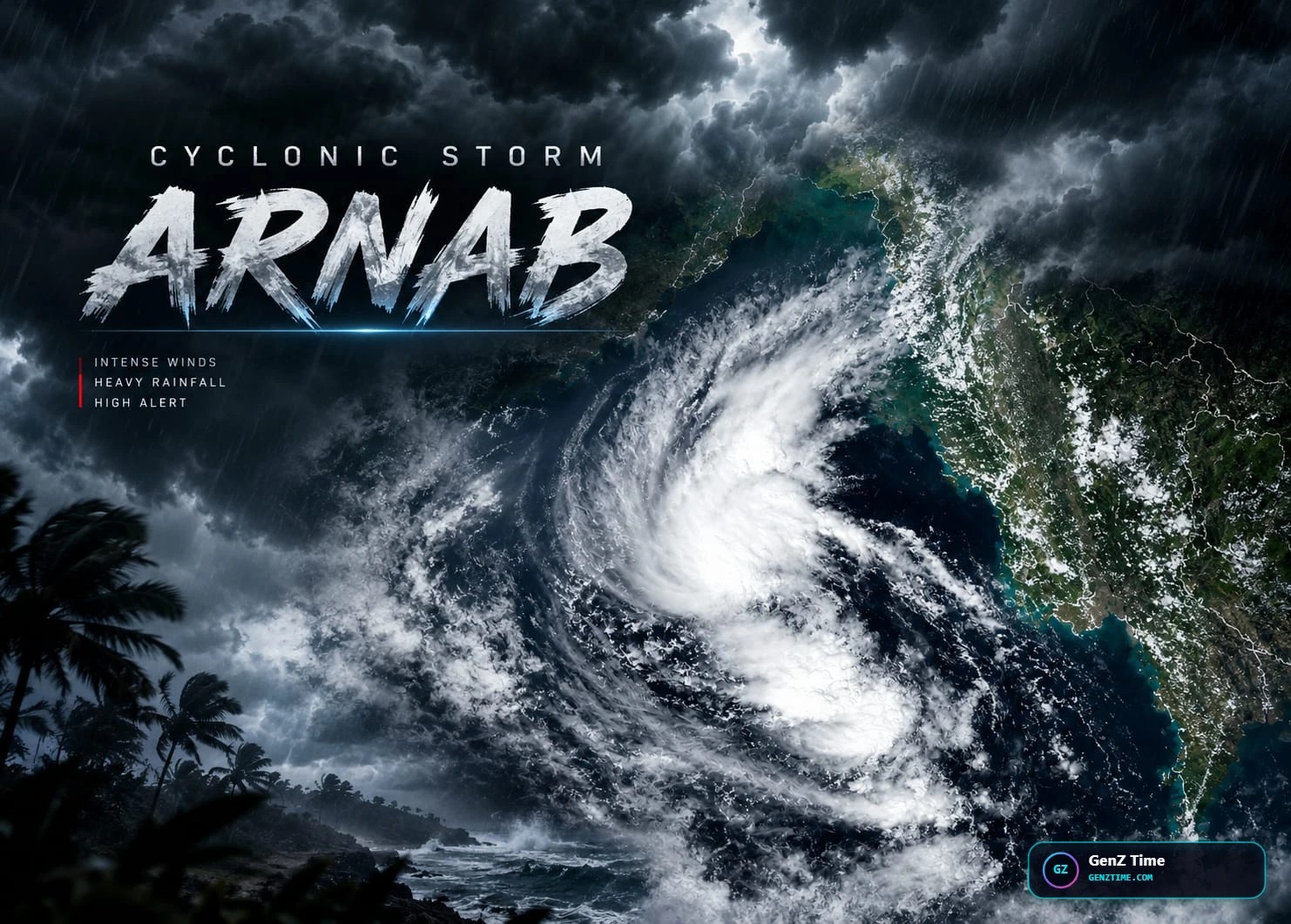
Key Takeaways & Executive Summary
- Cyclonic Storm Arnab formed on 26 October 2026. It is the first cyclonic storm of the year in the North Indian Ocean.
- IMD has issued a Red Message cyclone warning for the Andhra Pradesh and adjoining south Odisha coasts.
- The storm is expected to get stronger. It may become a severe cyclonic storm on 26 October and a very severe cyclonic storm on 27 October.
- Landfall is expected by the forenoon of 28 October. The likely crossing point is between Bapatla and Visakhapatnam, close to Yanam.
Cyclonic Storm Arnab: Red Alert Issued for Andhra Pradesh and Odisha Coasts
Last updated: 26 October 2026, based on IMD’s morning bulletins
A powerful storm is building over the Bay of Bengal, and India’s eastern coast is on high alert. Cyclone Arnab (pronounced “Ornab”) formed on 26 October 2026 and is the first cyclonic storm of the year in the North Indian Ocean. Here is what we know so far, in simple words.
Where Is Arnab Right Now?
In the early morning of 26 October, the storm was about 610 km southeast of Gopalpur (Odisha) and 650 km east-southeast of Visakhapatnam (Andhra Pradesh). It is moving west to west-northwest at roughly 13 km per hour. That is slow, which gives the storm more time to gather strength over warm sea water.
The India Meteorological Department (IMD) has issued a Red Message cyclone warning for the Andhra Pradesh and adjoining south Odisha coasts. A Red Message means the coast should get ready for impact soon.
How Strong Will It Become?
IMD expects Arnab to become a severe cyclonic storm by the evening of 26 October, and a very severe cyclonic storm on 27 October. The storm is likely to be at its strongest on 27 October. Wind speeds will rise through the day. At landfall, sustained winds could reach 115–125 km per hour, with gusts up to 140 km per hour.
Where Will It Hit Land?
The forecast says Arnab will cross the coast between Bapatla and Visakhapatnam, close to Yanam, by the forenoon of 28 October. The exact spot can still shift, because a cyclone’s path can change. Coastal districts of Andhra Pradesh and south Odisha should expect:
Heavy to very heavy rain Strong, damaging winds Very rough seas and higher tides Flooding in low-lying areas Fallen trees, damaged power lines and electricity cuts
Some weather experts also say that after landfall, the storm’s remains may mix with a western disturbance and bring heavy rain to parts of northern India and Nepal.
What Are Authorities Doing?
Officials have started preparing for the worst:
Schools and colleges: Educational institutions in high-risk districts of southern Odisha and Andhra Pradesh will stay closed on 28 and 29 October. Rescue teams: The National Disaster Response Force (NDRF) and State Disaster Response Force (SDRF) have been placed in coastal areas. Sea ban: All marine activity is banned. Fishermen who are already at sea are being called back to shore. How to Stay Safe
If you live in or near the affected coast, please follow these steps:
Stay indoors once the winds begin, and keep away from windows. Charge your phone and power bank now, before electricity is cut. Store drinking water, dry food and medicines for at least three days. Keep documents in a waterproof bag. Do not go to beaches, rivers or broken electric poles. Move to a relief shelter immediately if the local administration asks you to. Trust only official sources, such as IMD and your district administration, not social media forwards.
For emergencies, call 112. In Andhra Pradesh, the State Emergency Operations Centre can be reached at 1070 or 1800-425-0101.
The Bottom Line
Cyclone Arnab is still developing, so forecasts may change in the next 48 hours. The safest approach is to prepare early, not wait for the last moment. Check the official IMD website (mausam.imd.gov.in) for live updates, and share verified information with your family and neighbours.
Lab Pros & Cons Verdict
The Good / Advantages
- Early warning: IMD began tracking this system days before it became a cyclone, so people have time to prepare.
- Slow movement: The storm is moving at about 13 to 15 km/h, which gives authorities more time to evacuate and set up relief
- Rescue teams are ready: NDRF and SDRF teams are already placed in coastal areas.
- Sea safety: The ban on marine activity and the recall of fishermen reduce the risk to lives at sea.
The Bad / Drawbacks
- Rising intensity: The storm is expected to become a very severe cyclonic storm before landfall.
- Strong winds: Gusts up to 140 km/h can uproot trees, damage weak houses and bring down power lines.
- Flood risk: Heavy rain and high tides can flood low-lying coastal areas.
- Power and communication cuts: Electricity and mobile networks may fail for several hours or days.
Frequently Asked Questions
What is Cyclone Arnab?
Cyclone Arnab is a cyclonic storm that formed over the Bay of Bengal on 26 October 2026. The name is pronounced “Ornab.” It is the first cyclonic storm of 2026 in the North Indian Ocean region.
Who gave the name “Arnab”?
The name comes from the official list of cyclone names used for the North Indian Ocean. It was proposed by Bangladesh and means “ocean” in Bengali.
Which areas are most at risk?
The coasts of Andhra Pradesh and southern Odisha face the highest risk. Districts near Bapatla, Visakhapatnam and Yanam are expected to be closest to the landfall point.
References & Verified Sources
Experience • Expertise • Authoritativeness • Trustworthiness
Sahil
Hardware VerifiedFounder & Lead Hardware Editor
Lead hardware reviewer and founder at GenZ Time. Rigorously testing smartphones, silicon benchmarks, gaming gear, and AI hardware with real hands-on lab data.
Community Discussion & Tech Feedback
2 CommentsSpot on with the thermal analysis! Great to see a review that actually measures the wattage under sustained 4K rendering load instead of just repeating press release numbers.
How does the battery drain behave during continuous 5G tethering? Wondering if this makes a difference for daily mobile workflows.
More Related Gadget Reviews
Browse All →
Jio Platforms IPO: Price Band, Dates, Size & Key Details
Jio Platforms IPO: India’s Biggest Share Sale Opens on October 21
Sahil
BMSD 2026 Winner: iQOO SouL Win Finals in Hyderabad
BMSD 2026 Final: iQOO SouL Win the Title in Hyderabad
Sahil
Tesla Roadster 2026 Reveal: Upside-Down Drive & Rocket Flight
Tesla Roadster 2026 Reveal: It Drove Upside Down, Then Flew
Sahil