ASUS ROG Zephyrus G16 vs Strix G16 (2026): Specs, Price & Which to Buy
ASUS ROG G16 (2026): Zephyrus G16 vs Strix G16 — Which One Should You Actually Buy?

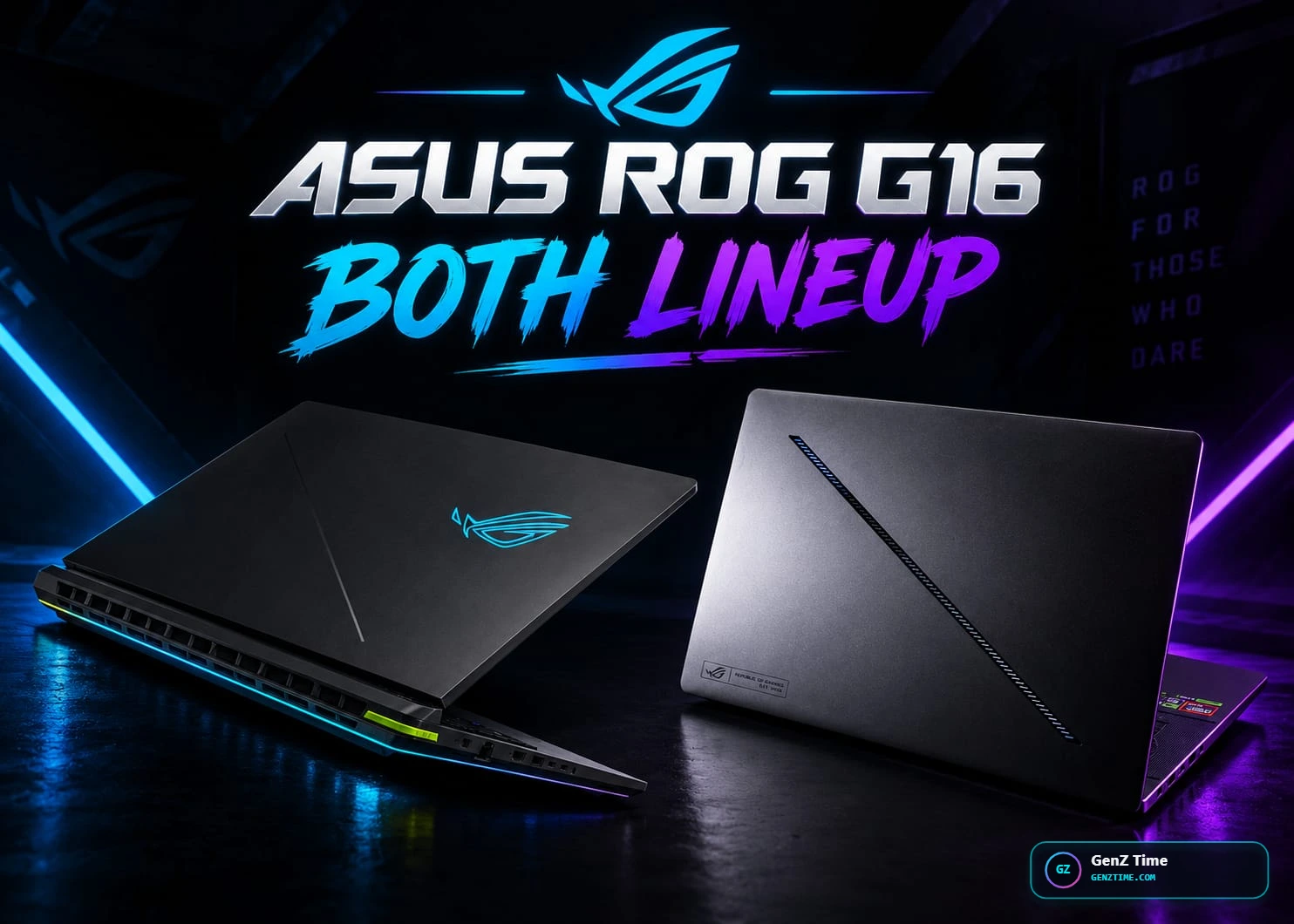
ASUS has two very different laptops sharing almost the same name. The ROG Zephyrus G16 and the ROG Strix G16 are both 16-inch gaming machines, both carry the ROG badge, and both cost serious money. But they are built for two completely different kinds of people, and once you understand that split, choosing between them becomes easy.
Two philosophies, one screen size
The Zephyrus G16 is the thin one. It is a CNC-machined aluminium slab that measures just 1.49 cm at its thinnest point and weighs around 1.85–1.95 kg, which is remarkable for a laptop carrying a full desktop-class GPU. It is the machine you carry into a meeting, a lecture hall or a coffee shop without anyone guessing it's a gaming laptop. The Strix G16 takes the opposite route. It is thicker, louder in personality, and tips the scale at roughly 2.65 kg. It is built to sit on a desk and push frames, not to travel light. Think of the Zephyrus as a sports sedan and the Strix as a track car.
Processors: efficiency versus raw muscle
Under the keyboard, the difference is just as clear. The 2026 Zephyrus G16 runs an Intel Core Ultra 9 processor 386H, a Series 3 chip with a powerful on-board AI NPU, tuned for performance per watt. The Strix G16 goes for the heavier HX-class silicon: an Intel Core Ultra 9 processor 290HX Plus with 24 cores and 24 threads, a 36MB cache and boost speeds up to 5.5 GHz. In everyday use both feel fast, but if your workload is long video exports, compiling code, or streaming while gaming, the Strix has more headroom simply because it has more cores and a bigger thermal budget to feed them. Asus
Graphics and thermals
Graphics is where the two lines separate most sharply, and where you have to read the exact SKU before paying. The Zephyrus G16 scales up to an RTX 5090 Laptop GPU at 160W in manual mode, though the configurations sold in India typically land around the RTX 5070 Ti and RTX 5080 tiers. The Strix G16 varies by region: Indian models are listed with up to an RTX 5070 Laptop GPU at a 115W max TGP, while global variants go up to an RTX 5080 at 175W. That 175W figure is the headline, because a higher TGP means the same GPU chip runs faster. ROG Zephyrus G16 (2026) GU606 | ROG Zephyrus | Gaming Laptops|ROG - Republic of Gamers|ROG Global +2
Cooling explains why the Strix can hold those numbers. Most laptops rely on two fans. The Strix G16 uses ROG Intelligent Cooling with Tri-Fan Technology plus an end-to-end vapour chamber and a sandwiched heatsink — that third, smaller fan sits centrally and helps keep video memory and power delivery cool, which is exactly the area that throttles first during long sessions. The Zephyrus G16 also uses a tri-fan design or a vapour chamber on some models, with CPU and GPU wattage limits tuned to what the slim chassis can safely handle. That last line is the honest trade-off of thin-and-light gaming: quieter and cooler on your lap, but not the absolute top of the performance charts. Asus Asus
Displays: colour depth or pure speed
The Zephyrus G16 leads with a 16-inch 2.5K OLED ROG Nebula Display at 240Hz, glossy, with inky blacks and excellent colour accuracy. It is genuinely lovely for movies, photo editing and single-player games. The Strix G16 leans competitive instead. Its 16-inch 2.5K Nebula panel goes up to 300Hz with a 3ms response time, 16:10 aspect ratio, 100% DCI-P3 and AGLR anti-reflection treatment. There is a catch worth knowing before you complain the refresh rate is "wrong": the panel defaults to 240Hz in Standard, Eco and Optimized GPU modes, and you unlock 300Hz by opening Armoury Crate and switching GPU mode to Ultimate. Ultimate mode routes the display directly to the discrete GPU, which costs battery life — hence the conservative default. Asus Asus
Memory, storage and upgrades
This is the single biggest long-term difference, and most buyers miss it. To hit that 1.49 cm profile and 8533 MT/s speeds, ASUS solders the Zephyrus G16's LPDDR5X memory to the motherboard, offering configurations up to 64GB, with one user-replaceable M.2 2280 PCIe 4.0 SSD slot. In plain terms: pick your RAM correctly on day one, because you can never add more. The Strix G16 is the opposite. It offers upgradeable DDR5 RAM and PCIe Gen4 SSD storage behind a tool-less access panel, and global models support dual-slot configurations up to 64GB. If you like opening your laptop in year three and giving it new life, the Strix is the only sensible pick. Asus Asus
Charger and battery
The Zephyrus ships with a compact 250W adapter that respects your bag. The Strix uses a 90Wh battery paired with a far larger brick — up to 380W on the top configurations — because higher TGP graphics simply need more power. Neither is a true all-day battery laptop under load, but the Zephyrus is clearly the better travel companion.
Price in India
Zephyrus G16 pricing sits in premium territory, with Indian prices starting around ₹3,59,990 and climbing for higher GPU and storage tiers. Strix G16 pricing spans a much wider range, from roughly ₹1.3–2 lakh for entry Core Ultra 7 and RTX 5060 configurations, up to around ₹3,71,990 for the Core Ultra 9 290HX Plus with 32GB RAM and RTX 5070. So the Strix family covers both mid-range and high-end, while the Zephyrus is premium only.
ASUS ROG Zephyrus G16 vs Strix G16 (2026) Tech Specs
Intel Core Ultra 9 / Intel Core HX
High-performance NVIDIA GeForce RTX dedicated graphics
16-inch 2.5K OLED Nebula display (2560 x 1600
DDR5 SODIMM RAM / LPDDR5X
2TB on the Zephyrus and up to 1TB on the Strix.
90Wh internal power adapters ranging from 240W to 280W
90Wh internal power adapters ranging from 240W to 280W fRJ45 Ethernet jack and dual high-speed Type-C/Thunderbolt ports / Ethernet port for a built-in SD card reader.
Windows 11 Home
1.90kg / 2.65kg
₹359,990 to ₹529,990 (approx. $1,400 to $2,200 USD) / ₹199,990 to ₹249,990 (approx. $1,200 to $1,600 USD)
Lab Pros & Cons Verdict
The Good / Advantages
- Light and Thin
- Better Gaming Experience
- Worth Every Penny
The Bad / Drawbacks
- High Price
- Heat Issue
Experience • Expertise • Authoritativeness • Trustworthiness
Editor's Choice
An exceptional tech gadget delivering superb performance and industrial design.
Tested independently by GenZ Time Editorial Lab
GenZ Editorial Team
Hardware VerifiedSenior Tech Analyst & Hardware Reviewer
Tech journalist and hardware analyst at GenZ Time.
Community Discussion & Tech Feedback
2 CommentsSpot on with the thermal analysis! Great to see a review that actually measures the wattage under sustained 4K rendering load instead of just repeating press release numbers.
How does the battery drain behave during continuous 5G tethering? Wondering if this makes a difference for daily mobile workflows.
More Related Gadget Reviews
Browse All →
M4 Max MacBook Pro 16-inch: Relentless Performance for Creators
Apple's M4 Max silicon unleashes 16 CPU cores, 40 GPU cores, and up to 128GB unified memory with liquid retina XDR nano-texture display brilliance.
GenZ Editorial Team
BGMI 4.6 Update "Midnight Hunters": Release Date, New Abilities & Full Details
Big news for BGMI players. The upcoming BGMI 4.6 Update will blow your mind. Don't miss these details about 4.6 Update.
GenZ Editorial Team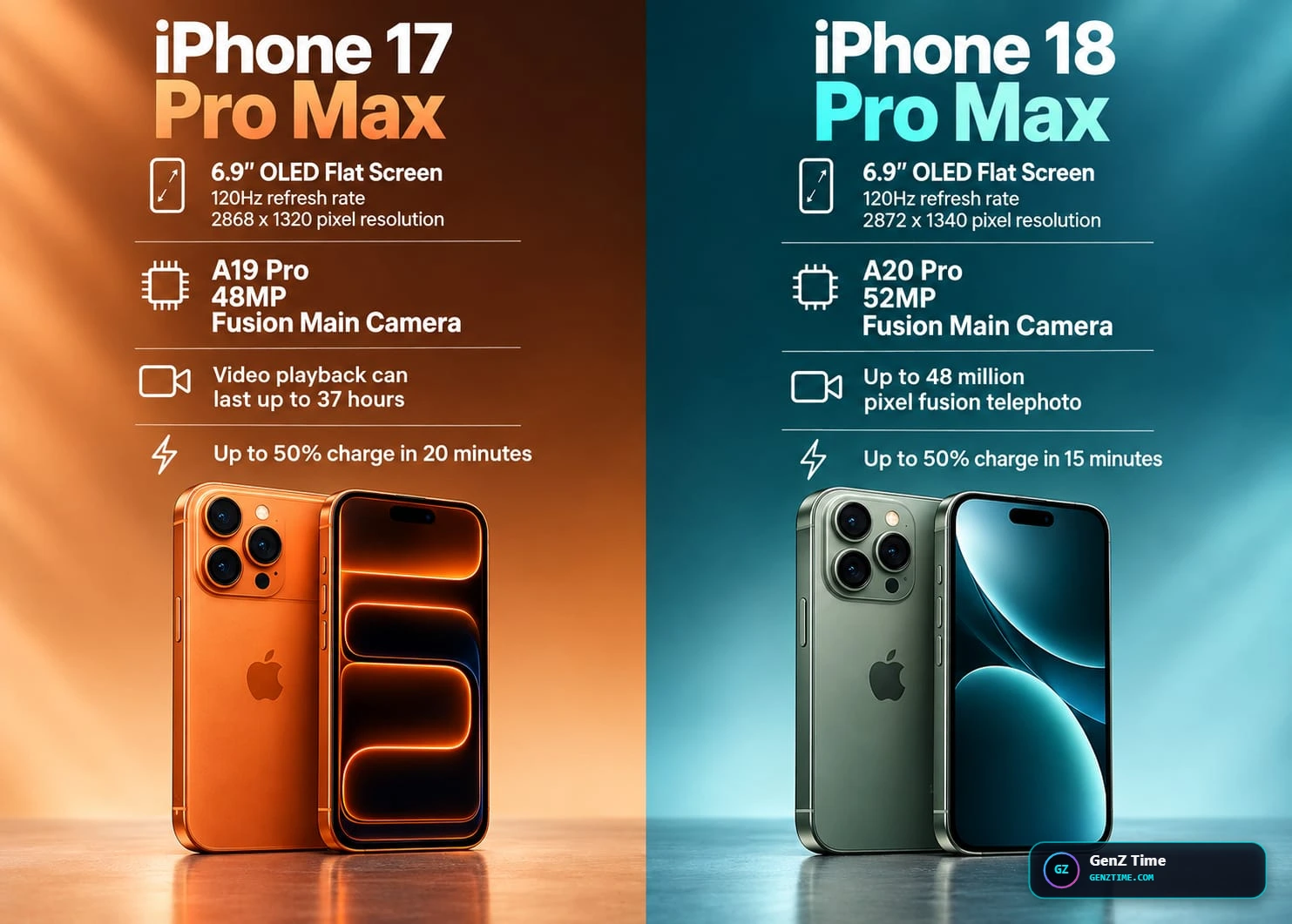
iPhone 17 vs iPhone 18 Pro vs Pro Max: Should You Upgrade?
iPhone 17 vs iPhone 18 Pro and Pro Max: compare performance, cameras, battery, storage, price and key upgrades to decide whether upgrading is worth it.
GenZ Editorial Team